
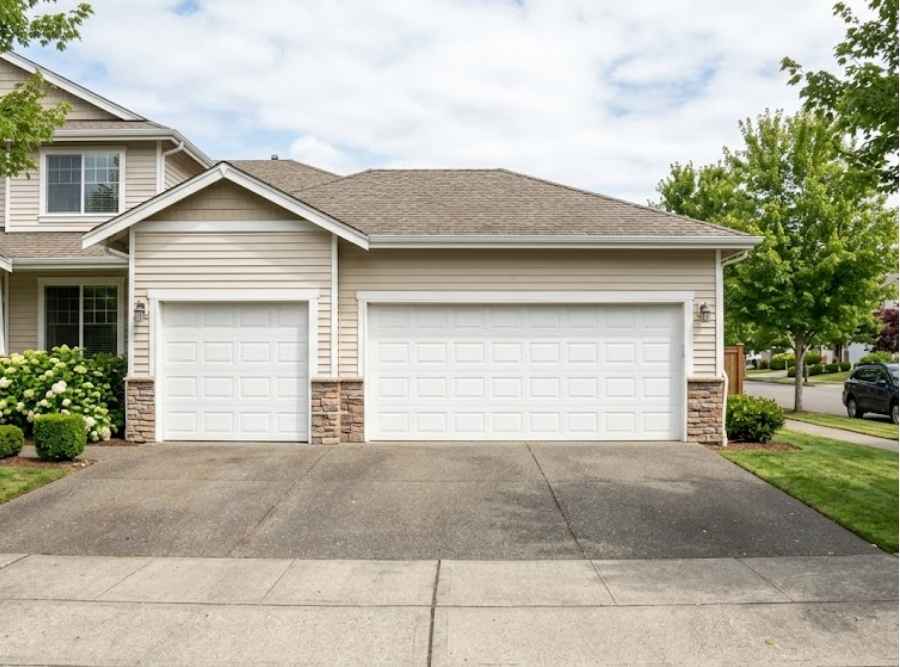
Garage Door Sizes Explained: 8×7, 9×7, and 16×7
8×7 and 9×7 doors both fit single-car garages — 9×7 is the more common modern standard, giving roughly 12 more inches of clearance than an 8×7. A 16×7 door is the standard two-car size and weighs considerably more, which changes what it needs structurally. Blue Steel Garage Door Services installs and replaces all three sizes throughout Pasco and Hillsborough Counties, and this guide covers how to tell which one you have and what changes as size increases.
What’s the Difference Between an 8×7 and a 9×7 Garage Door?
Newer homes have largely shifted toward 9×7 doors because the extra 12 inches of width gives more clearance for modern, larger vehicles and makes maneuvering in and out easier. 8×7 doors are still common on older single-car garages built before this shift became standard. To find out which one a home has, measure the width of the opening itself at its widest point, not the door panel, since panels can be slightly oversized to seal the opening properly — 8 feet or 9 feet is the number that matters.
What Makes a 16×7 Door Different From a Single-Car Door?
A 16×7 door covers a standard two-car garage opening and is significantly heavier than either single-car size, simply due to the added width and panel material. That added weight has a direct effect on the springs: a 16×7 door requires springs rated for substantially more lifting force, and an opener sized for a single-car door will strain or fail prematurely if installed on a double-wide door instead.
Do Larger Doors Need Different Materials?
Because 16×7 doors carry more weight and span a wider opening, they benefit more from steel or insulated panel construction for structural rigidity — an uninsulated door that size is more prone to flexing and warping over time, especially in wind. Single-car doors have more flexibility in material choice since the smaller span puts less structural stress on the panels regardless of material chosen.
Does Door Size Change What Maintenance a Door Needs?
The extra weight on a 16×7 door means its springs, rollers, and cables all wear faster than on a single-car door under the same usage frequency. Regular lubrication and periodic balance checks matter more on double-wide doors specifically, because the consequences of neglecting them — spring failure, opener strain tend to show up sooner than on a lighter single-car door.
Whether it’s confirming the correct size for a replacement or making sure a new door’s springs and opener are properly matched to its weight, Blue Steel Garage Door Services handles installation and replacement across Pasco and Hillsborough Counties. The Garage Door Replacement page covers what that process typically involves.
Frequently Asked Questions About Garage Door Sizes
How do I measure my garage door opening to know its size?
Measure the width of the opening at its widest point, from the inside edge of one door track to the other, not the door panel itself. Standard single-car openings are 8 or 9 feet wide, and standard double-car openings are 16 feet wide, though 12- and 18-foot variants exist on some homes.
Do larger 16×7 doors need heavier-duty springs?
Yes. A 16×7 door weighs considerably more than a single-car door of the same material, and its torsion springs are rated specifically for that added weight. Using a spring rated for a smaller door on a 16×7 opening will cause the opener to strain and the door to operate unevenly.
Can I upsize my opening from 8×7 to 9×7?
It’s possible but involves more than swapping the door — the framing, tracks, and often the header above the opening typically need modification to accommodate the wider width, which makes it a structural project rather than a simple door replacement.
