
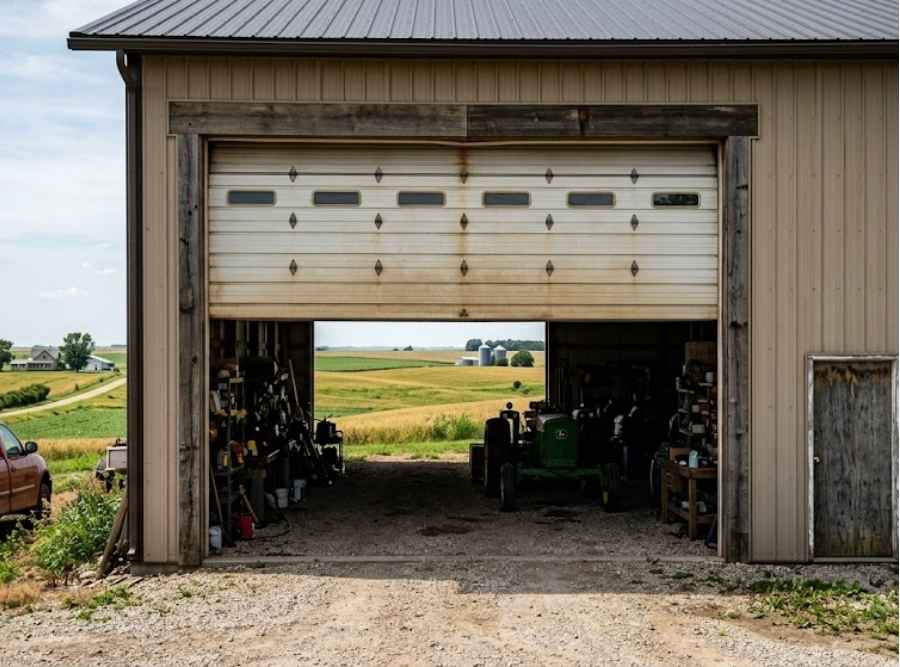
Do Rural and Agricultural Properties Near Dade City Need a Different Garage Door Permit Than In-Town Homes?
Yes, in an important way. Florida Statute 604.50 exempts qualifying nonresidential farm buildings from the Florida Building Code entirely, which doesn’t apply to a standard in-town residential garage. Pasco County still requires a permit from Central Permitting for those agricultural structures, though, just to confirm compliance with the Land Development Code rather than the building code itself.
What Makes a Rural Property Different Under Florida Law?
Florida Statute 604.50 exempts nonresidential farm buildings, farm fences, and farm signs located on land used for bona fide agricultural purposes from the Florida Building Code and any county or municipal building code. That’s a meaningfully different starting point than a standard residential property, which has no equivalent exemption and follows the ordinary permit rules for any garage door replacement.
Qualifying for this exemption isn’t automatic just because a property is rural or has some agricultural activity happening on it. The property generally needs a documented agricultural classification, often called a “greenbelt” designation, from the county property appraiser’s office.
What Does the Agricultural Exemption Actually Exempt?
The exemption covers the Florida Building Code itself, meaning a qualifying farm building’s garage door doesn’t need to meet the same wind-load and impact documentation that a standard residential replacement requires. This is a real, substantive difference for a property owner installing a large overhead door on a pole barn or equipment building.
Floodplain management regulations still apply regardless of the agricultural exemption, so a structure in a flood-prone area isn’t fully exempt from all regulatory oversight just because it qualifies as a farm building.
Why Does Pasco County Still Require a Permit Anyway?
This is the detail that catches property owners off guard. Pasco County’s own code states that structures incidental to farming operations on qualifying agricultural property are exempt from the Florida Building Code, but still require a permit from the central permitting manager to confirm the structure complies with the county’s Land Development Code and Pasco County Code more broadly.
In practical terms, the building-code exemption and the permit requirement are two separate things, and a rural property owner can be genuinely exempt from one while still needing the other. Skipping the permit application on the assumption that the agricultural exemption covers everything is a common and avoidable mistake.
How Does This Compare to a Standard In-Town Home?
An in-town residential property has no equivalent building-code exemption. A garage door replacement there follows the standard rule: repairs are generally exempt from a permit, while a full replacement requires one, along with documentation showing the new door meets the county’s current wind-load and impact requirements. There’s no Land-Development-Code-only pathway available to a standard residential lot the way there is for qualifying farm buildings.
Confirming Which Rules Actually Apply Before Work Starts
For a garage door project on a rural or agricultural property near Dade City, Blue Steel Garage Door Services can help sort out whether the agricultural exemption applies and what Pasco County still requires either way. Our garage door installation service covers detached garages, workshops, and outbuildings, and you can learn more about our garage door service in Dade City, where we’ve been based since 2004.
Frequently Asked Questions About Garage Door Permits for Rural and Agricultural Properties
How do I know if my property qualifies for the agricultural building exemption?
Qualifying generally requires a documented agricultural or “greenbelt” classification from the Pasco County Property Appraiser’s office, or proof of an active farm operation. Checking with the property appraiser directly is the most reliable way to confirm status before assuming the exemption applies.
Does the agricultural exemption cover a garage or workshop that isn’t used for farming?
Generally not. The exemption applies to nonresidential farm buildings incidental to actual farming operations, so a garage or workshop used for personal vehicles or hobbies rather than agricultural production likely wouldn’t qualify even on agriculturally classified land.
What happens if I install a door on a farm building without getting the required Land Development Code permit?
Skipping the required permit, even on an agriculturally exempt structure, can create the same kinds of complications an unpermitted residential job would: issues during a future sale, or questions from the county if the structure is ever reviewed for compliance.
Is the permit process different for an agricultural exemption than for a standard residential permit?
Yes. It runs through Pasco County’s Central Permitting office specifically for Land Development Code compliance rather than Florida Building Code review, which is a narrower and generally different process than a standard residential building permit application.
