
Can You Install a Garage Door Yourself Without Voiding the Manufacturer’s Warranty?
In most cases, no. Manufacturer warranties on garage doors commonly require professional installation, and a DIY installation can void some or all of that coverage, especially for problems the manufacturer can’t separate from installation errors. The exact terms vary by manufacturer, so checking the specific warranty documentation before attempting a DIY installation is worth doing rather than assuming coverage will carry over.
Why Do Most Garage Door Warranties Require Professional Installation?
A garage door involves calibrated spring tension, precise track alignment, and an opener that has to be correctly paired with the door’s weight and balance. Manufacturers generally require professional installation because incorrect installation, even something that looks fine on the surface, can create stress on components in ways that lead to premature failure, and it’s genuinely difficult for the manufacturer to distinguish a defect from an installation error after the fact.
This isn’t unique to garage doors. Many products with safety-critical mechanical components carry similar professional-installation requirements, since the warranty is meant to cover manufacturing defects, not problems introduced during setup.
What Specifically Can Void Coverage?
Beyond the installation itself, unauthorized alterations, using non-approved replacement parts, and skipping documented maintenance requirements can all affect warranty coverage over the life of the door. Some opener warranties are voided specifically by opening the motor housing or using an off-brand drive component, which is a narrower issue than the installation question but worth knowing about separately.
Warranty documentation typically distinguishes between the door panel warranty, which often covers materials and workmanship for a longer period, and a separate installation or labor warranty, which is usually shorter and tied specifically to who performed the installation.
Does This Apply to Repairs, or Just Full Installations?
The professional-installation requirement is generally about the initial installation rather than every subsequent repair, but many warranties also specify that repairs must be performed by an authorized technician to remain valid. A homeowner making a DIY repair, such as adjusting a sensor or replacing a minor part, can affect warranty coverage in some cases even if the original installation was done professionally.
This is worth checking specifically, since the rules for repairs aren’t always identical to the rules for the original installation, and assuming one automatically covers the other is a common mistake.
What Should You Check Before Attempting DIY Work?
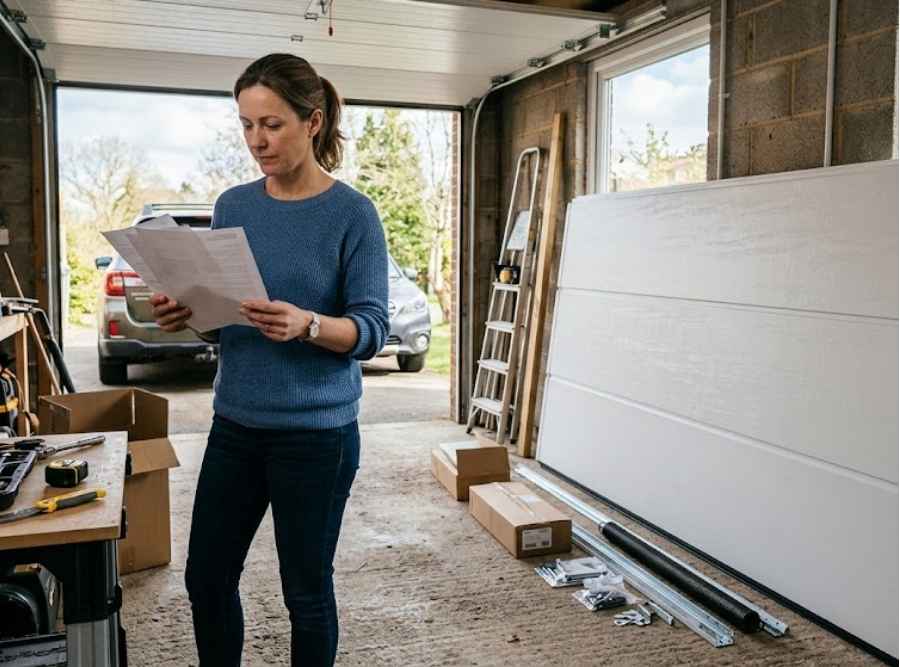
Reviewing the specific warranty documentation that came with the door, or requesting it from the manufacturer or dealer if it wasn’t kept, is the only reliable way to know what a specific warranty actually requires. Warranty terms vary enough between manufacturers that general advice about garage door warranties broadly doesn’t substitute for checking the actual document for the door in question.
Protecting the Warranty You’re Already Paying For
Before attempting a DIY installation or repair on a garage door still under warranty, Blue Steel Garage Door Services can help confirm what that warranty actually requires. If the warranty calls for a qualified installer, our professional garage door installation service handles the full job, from confirming the rough opening to the final safety test.
Frequently Asked Questions About Garage Door Warranties and DIY Work
Does a DIY installation void the entire warranty, or just part of it?
This depends on the specific manufacturer’s terms. Some warranties distinguish between the materials warranty, which may remain partially intact, and the installation or labor warranty, which is more directly tied to professional installation. Checking the specific documentation is the only way to know for a given door.
If I already installed a door myself, is there any way to get warranty coverage back?
Generally not retroactively, though this varies by manufacturer. Some manufacturers may offer an inspection or certification process for an existing DIY installation, but this isn’t standard across the industry and would need to be confirmed directly with the specific manufacturer.
Do all garage door brands have the same professional-installation requirement?
No, requirements vary by manufacturer and even by specific product line. Some warranties are stricter about this than others, which is part of why checking the actual documentation matters more than relying on general assumptions.
Does using a licensed handyman instead of a garage door specialist satisfy a “professional installation” requirement?
This depends on how the specific warranty defines a qualified installer. Some manufacturers require installation by an authorized dealer or certified technician specifically, which a general handyman may not satisfy even though they’re a licensed professional in a broader sense.
