
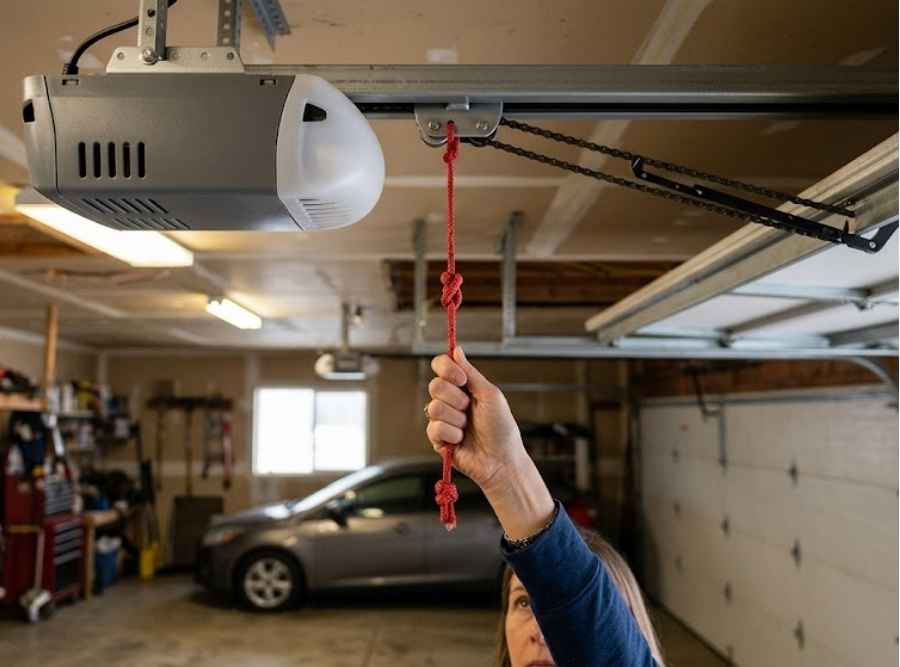
How Do You Open Your Garage Door Manually During a Power Outage?
Locate the manual release cord, typically a red handle hanging from the opener’s center rail, and pull it down and toward the door to disconnect the door from the opener. Once disconnected, the door can be lifted by hand, though this should only be attempted when the door is fully closed and functioning normally, since a broken spring or cable makes manual lifting dangerous.
How Does the Manual Release Actually Work?
Every automatic garage door opener includes a manual release mechanism specifically for situations like a power outage. The release cord disconnects the trolley, which is the component that connects the door to the opener’s drive mechanism, letting the door move freely on its tracks without the opener’s motor involved at all.
This system exists because a garage is often a primary point of entry, and being unable to open it during an outage can leave a family locked in or out of their own home.
Step-by-Step: Opening the Door Manually
The process is straightforward once the release cord is located.
- Confirm the door is fully closed before starting, since releasing the trolley while the door is open or partially open can cause it to drop suddenly
- Locate the red release cord hanging from the center rail of the opener system
- Pull the cord down and toward the door to disconnect the trolley from the drive mechanism
- Lift the door by hand, using both hands and lifting evenly rather than from one side
- If the door feels unusually heavy or resists lifting, stop and treat it as a possible spring issue rather than forcing it
When Should You Not Attempt This?
If the door feels significantly heavier than normal, or there’s a visible gap in the torsion spring above the door, that points to a spring or cable problem rather than a simple power issue, and attempting to force the door open in that condition is a real injury risk. A door that won’t move at all, even after confirming the release cord has been pulled, is also a sign something beyond the power outage is going on.
This is a case where the safe move is to stop rather than push through resistance, since a garage door under a failed spring can drop with enough force to cause serious injury.
How Do You Reconnect the Opener Once Power Returns?
Reconnecting generally involves making sure the door is fully closed, then pulling the release cord again at an angle toward the opener rather than away from it, which re-engages the trolley with the drive mechanism. Pressing the wall button or remote afterward should confirm the door is operating automatically again; if it doesn’t respond as expected, that’s worth having checked rather than repeatedly forcing the reconnection attempt.
Knowing the Manual Release Before You Actually Need It
If a door felt unusually heavy or wouldn’t cooperate during a recent outage, Blue Steel Garage Door Services can take a look at what’s actually going on before the next storm. If the opener itself didn’t come back after power was restored, our garage door opener repair service covers all major brands, including LiftMaster, Chamberlain, Craftsman, and Genie.
Frequently Asked Questions About Manually Opening a Garage Door During a Power Outage
Where exactly is the manual release cord located?
It’s typically a red, T-shaped handle hanging from the center rail that connects the opener to the door, usually near the front of the door when it’s in the closed position. The exact location can vary slightly by opener model.
Can pulling the release cord damage the opener?
No, the release mechanism is designed for this exact purpose and pulling it correctly, with the door closed, doesn’t damage the opener. Pulling it while the door is open or partially open is the situation to avoid, since that’s when the door can drop unexpectedly.
Is it safe to leave the door manually operated for an extended outage?
Yes, a door can be operated manually for as long as needed during an outage, as long as it’s otherwise in normal working condition. There’s no time limit on manual operation itself.
What if the door won’t move even after pulling the release cord?
This suggests something beyond the power outage is affecting the door, most likely a spring, cable, or track issue. Forcing a door that won’t move is a safety risk, so this situation is worth having evaluated rather than continuing to try.
