
What’s the Best Garage Door Material for Dade City’s Heat, Humidity, and Storms?
There isn’t a single best material for every Dade City home, since the right choice depends on which priority matters most: insulated steel holds up well against storm wind-load requirements, aluminum and vinyl resist Florida’s heat and humidity with minimal upkeep, and wood or wood-look composite fits homes where historic appearance matters more than low maintenance.
What Are the Realistic Material Options?
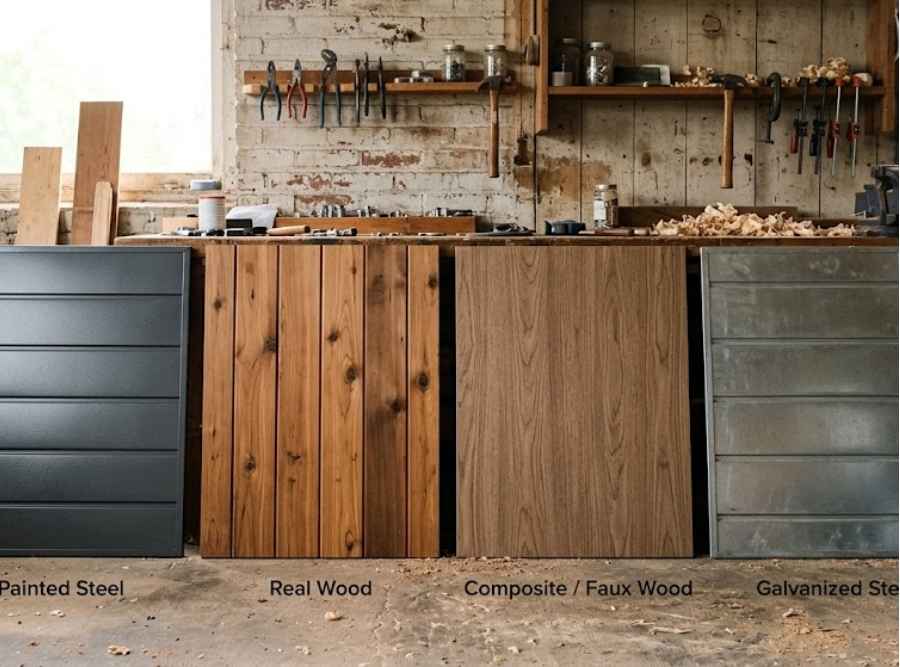
Steel is the most common choice for Florida garage doors, largely because it can be manufactured to meet wind-load and impact requirements without the tradeoffs some other materials involve. Insulated steel doors, built with a foam core between two steel skins, add thermal performance on top of that durability, which matters for an attached garage in Florida’s heat.
Aluminum and vinyl both resist moisture-related issues like rot and rust better than untreated steel, and neither requires the periodic refinishing that wood does. Wood and wood-look composite round out the options, with real wood offering genuine historic character at the cost of ongoing maintenance, and composite splitting the difference by mimicking wood’s appearance with considerably less upkeep.
How Does Heat and Humidity Affect Each Material Differently?
Steel absorbs and transfers heat efficiently, which can contribute to warping or panel expansion issues over time if the door isn’t properly insulated, though this is more of a concern with older or lower-quality steel doors than with modern insulated models. Wood is the material most vulnerable to Florida’s combination of heat and humidity, since moisture absorption leads to swelling, warping, and cracking, particularly on a door that gets direct afternoon sun.
Aluminum and vinyl generally perform well under Florida’s heat and humidity specifically, since neither absorbs moisture the way wood does or corrodes the way untreated steel can. Fiberglass and composite materials sit in a similar category, resisting warping and moisture damage while offering more design flexibility than aluminum alone.
What About Storm and Wind-Load Requirements?
Whatever material is chosen, the door still has to meet Pasco County’s wind-load and impact requirements under the Florida Building Code, documented through a Florida Product Approval number. Steel is the most straightforward material for meeting these requirements at a reasonable cost, which is part of why it remains the default choice for storm-prone Florida properties.
Wood doors can be engineered to meet wind-load requirements, but doing so typically adds more cost and complexity than achieving the same rating with steel, which is a real tradeoff for a homeowner prioritizing historic appearance in a storm-exposed area.
Which Material Actually Fits Which Priority?
A homeowner prioritizing low maintenance and straightforward storm compliance is generally best served by insulated steel or aluminum. A homeowner prioritizing historic appearance, particularly in Dade City’s historic district, may lean toward wood or a wood-look composite despite the added upkeep or cost, accepting that tradeoff for the appearance it preserves. There isn’t a wrong answer here so much as a set of tradeoffs that depend on what the homeowner actually cares about most.
Matching the Material to What Actually Matters
For homeowners weighing material options for a Dade City property, Blue Steel Garage Door Services can help sort out which tradeoffs actually matter for that specific home. Our garage door replacement process starts with an in-home consultation, where we measure the opening and walk through material options side by side. You can also learn more about our garage door service in Dade City, where we’ve been based since 2004.
Frequently Asked Questions About Garage Door Materials for Florida’s Climate
Is insulated steel worth the extra cost over standard steel in Dade City’s climate?
For an attached garage, insulation can meaningfully reduce heat transfer into the home, which is a real consideration in Florida’s climate. Whether the added cost is worthwhile depends on the garage’s use and whether it’s attached to conditioned living space.
Does aluminum dent more easily than steel?
Generally yes. Aluminum is lighter and more prone to denting from impact than steel, which is a tradeoff against its rust resistance and lower maintenance requirements.
Can a wood-look composite door actually pass a wind-load inspection?
Yes, composite doors are manufactured with their own Florida Product Approval documentation, the same as steel or aluminum doors, so a properly certified composite door can meet the same wind-load and impact requirements.
How much more maintenance does a real wood door need compared to steel?
Real wood generally requires periodic refinishing, every few years depending on sun exposure and weathering, along with more attentive moisture and pest monitoring, compared to steel or aluminum, which mainly need routine cleaning and occasional touch-up.
