
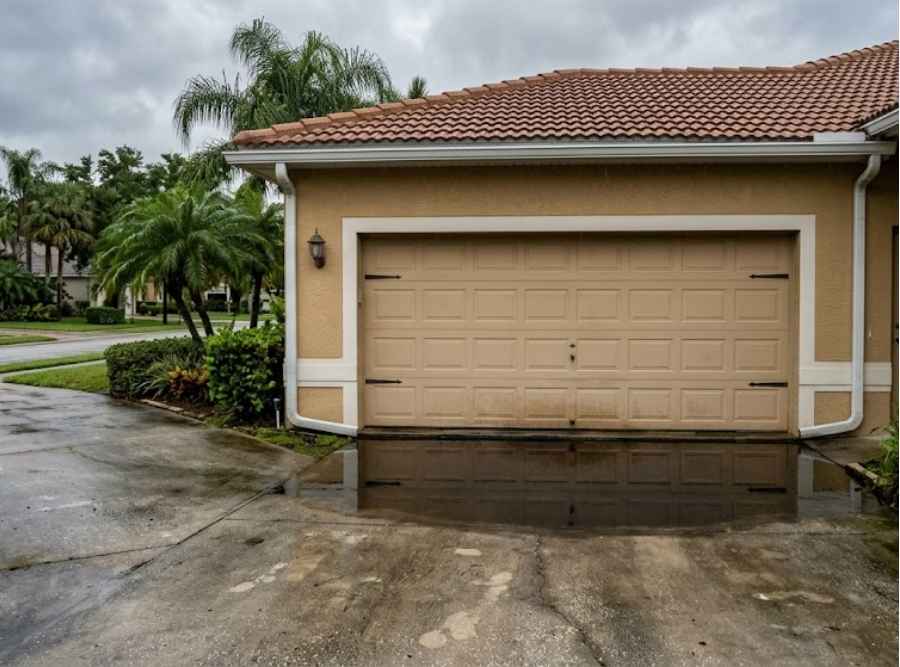
Why Does Water Pool in Front of Your Garage Door When It Rains in Dade City?
Water pooling in front of a garage door is usually caused by a driveway or approach that slopes toward the garage rather than away from it, which shows up more often on Dade City properties with rolling terrain than on perfectly flat lots. Left unaddressed, repeated pooling can accelerate corrosion on the bottom panel and hardware over time, even though the underlying cause is drainage rather than a problem with the door itself.
Why Does This Happen More on Some Dade City Properties Than Others?
Dade City’s terrain includes more elevation change than much of flat coastal Florida, and driveways built decades ago weren’t always graded with modern drainage standards in mind. A driveway that slopes even slightly toward the garage, rather than away from it, will funnel rainwater directly at the door during any real rain event, and Florida’s afternoon storms don’t need to be severe to make this noticeable.
This isn’t unique to older homes, but it does show up more often on properties where the driveway was poured before more careful grading became standard practice, or where landscaping changes over the years have altered how water actually flows across the property.
What Does Standing Water Actually Do to a Garage Door Over Time?
The door’s bottom panel and the hardware near it, including the bottom bracket and the lower sections of track, are the components most exposed to repeated standing water. Steel panels and hardware that sit in water repeatedly, even for short periods after each rain, corrode faster than the same components would if water simply ran past and drained away.
This is a case where the symptom shows up somewhere other than the actual cause. A homeowner dealing with a rusting bottom panel might reasonably assume the panel itself is defective or just old, when the real driver is a drainage pattern that’s been soaking that panel after every rain for years.
What Are the Realistic Fixes?
A threshold seal installed at the base of the door can redirect a modest amount of water and reduce how much actually reaches the panel, and it’s a relatively low-cost first step. For driveways with a more significant slope problem, regrading the approach or adding a drainage channel across the driveway addresses the water before it ever reaches the door, which is a more durable fix than repeatedly treating the symptom at the door itself.
Replacing a corroded bottom panel without addressing the underlying drainage issue generally means the new panel faces the same exposure the old one did, just starting the corrosion clock over again.
When Is It a Drainage Problem vs. a Door Problem?
If water is pooling specifically at the garage and nowhere else on the property, that’s a strong sign the issue is the approach’s grading rather than the door. If the bottom seal itself has become brittle, cracked, or is no longer making full contact with the ground, that’s a door-side issue worth addressing regardless of the drainage situation, since a failing seal lets in more water than a properly sealed door would even under the same drainage conditions.
The Blue Steel Approach
Blue Steel Garage Door Services looks at the whole picture when a bottom panel shows repeated corrosion, rather than simply replacing the panel and calling it done. Understanding whether drainage is contributing to the problem helps homeowners decide whether a panel replacement alone will actually hold up, or whether it’s worth addressing the grading at the same time.
Fixing the Real Problem, Not Just the Panel
If a garage door’s bottom panel keeps corroding faster than seems reasonable, Blue Steel Garage Door Services can take a look at whether drainage is part of the story before recommending a repair.
Frequently Asked Questions About Water Pooling at Garage Doors
Will regrading my driveway actually solve the pooling problem?
In many cases, yes, if the slope toward the garage is the main cause. Regrading addresses the water before it reaches the door, which tends to be more durable than repeatedly treating the symptom at the door itself.
Can I install a threshold seal myself?
Basic threshold seals are a reasonable DIY project for a comfortable homeowner, though more involved drainage corrections, like regrading or adding a drainage channel, are generally better suited to a professional.
Does homeowners insurance cover water damage from repeated pooling?
Generally not. Gradual water damage from a recurring drainage issue is typically treated differently than sudden storm damage, and most standard policies exclude damage that developed slowly over time rather than from a specific covered event.
How can I tell if the water is coming from my own property or a neighbor’s runoff?
Watching where water flows during and immediately after a rain event, and checking the grading along the property line, usually makes the source clear. A professional drainage assessment can confirm it if it’s not obvious.
